
A Radical Unrecognized: Dr. Martin Luther King Jr.
Dr. King’s legacy must be shown in its fullest power

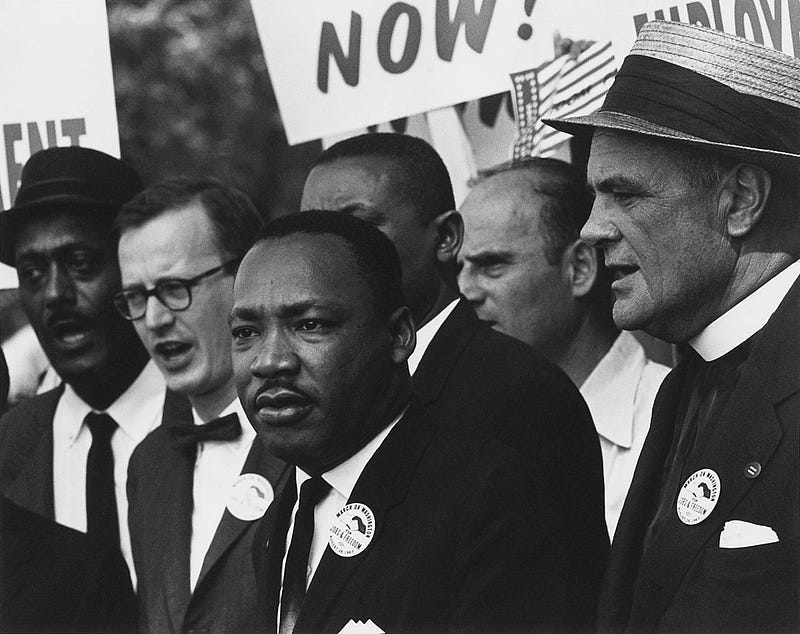
Monday was Martin Luther King day, and we all know what that means. Millions of Americans begin praising his name, smiling at the thought of a preacher who “ended” racism in America. Channels like MSNBC will show movies such as Selma, praising the nonviolence of his struggle, and Americans will try to look fondly on their nation as if his struggle ever ended. And while remembrance is good, I can not help but notice just how far removed from Dr. King’s vision America truly is. Not to mention the fact that most Americans never really got to know Dr. King as he truly was: a radical figure of social change.
When King’s legacy is talked about, if it is at all, it is usually invoked as a condemnation of the Black Lives Matter protests. Many an ideologue will reveal their ignorance of King and his views to suppress and ignore Black Americans’ grievances and demands for social justice more generally. Those who seek to condemn Black Lives Matter and calls for racial justice in America hold a simple position. It could be best summarized by the saying, “If you want to end racism, don’t talk about race.” To those who promote this view, the mere mention of race is itself an act of racism that must be condemned and quashed. Indeed, when trying to espouse this suppressionist position, those in white America will quote Dr. King’s I Have a Dream speech to justify their empty-headed centrism, saying:
“I have a dream that my four little children will one day live in a nation where they will not be judged by the color of their skin but by the content of their character.” -Dr. Martin Luther King Jr. on August 28th, 1963.
This quote, of course, sounds like a decent and honest thing. And it was when King said it, but if someone is left with only this quote to understand King’s position on race, then they would come off woefully unfamiliar with who King was. For one, the mere discussion of race is not a good measurement of whether someone is racist. If it were, King himself would be condemned by this very standard. As I have noted before, King was never of the opinion that discussing race was wrong. He made explicit critiques of particular racial communities that played the middle ground on human rights. In his Letter from a Birmingham Jail, King did not hesitate to note who was holding back his cause, saying:
“I must confess that over the past few years, I have been gravely disappointed with the white moderate. I have almost reached the regrettable conclusion that the Negro’s great stumbling block in his stride toward freedom is not the White Citizen’s Councilor or the Ku Klux Klanner, but the white moderate, who is more devoted to “order” than to justice; who prefers a negative peace which is the absence of tension to a positive peace which is the presence of justice.” -Dr. Martin Luther King in his Letter from a Birmingham Jail.
If such discussions of race were the measure upon which we would judge whether or not someone is racist, then King and many other legends of civil rights activism would be considered racists and condemned to the ash heap of history. Of course, no reasonable person would dare to make the insinuation that King was a racist unless they were trying to sell a story of white victim-hood or some other malicious agenda. But what white America has done is sold a nicer and more complimentary activist for the American people to accept. For years, America has sold its more radical sons and daughters out for facades that cover up the incomplete nature of America’s racial and economic struggle.
Though I have never experienced racism myself, one thing has become increasingly clear to me: It is not mentioning race that makes a person racist or even acknowledging its presence that stains a person’s character. It is an unwillingness to see how race creates unjust and oppressive treatment for one group of people while privileging others. It is demanding peaceful protest only to spurn the reasons for that protest when it arrives. Ultimately, we can all see race, but it is how we choose to react to it that determines which side we serve. Do we stand on the side of justice? Or do we stand on the side of what King called a “negative peace?” We are obligated to chose justice, no matter what.
There is yet another aspect of King’s legacy that must be addressed: his socialism. Many modern Republicans would argue that King was a registered Republican, but this approach is nothing more than an attempt to claim King without addressing his economic critiques and policies. In 1968, Marion Wright, the then director of the NAACP, approached King about a new campaign which they dubbed The Poor People’s Campaign. Through nonviolent direct action, King and his colleagues sought to force the federal government to provide adequate financial support to impoverished communities of many races and ethnicities. It was, at its core, a call for social programs and public support to the impoverished. And it was recognized as such.
Even King’s I Have A Dream speech was given within the context of his economic critiques. The March on Washington, as it is now known, was not the full name of the event. It was known as the March on Washington for Jobs and Freedom. It was as much about economic and social support for the poor as it was about civil rights. At the core of King’s legacy is a mix of economic and racial justice that has never been adequately recognized.
In the end, King’s assassination on April 4th, 1968 is what ended the Poor People’s Campaign, but it was the whitewashing of his legacy that poured salt into the wounds of unfinished business.
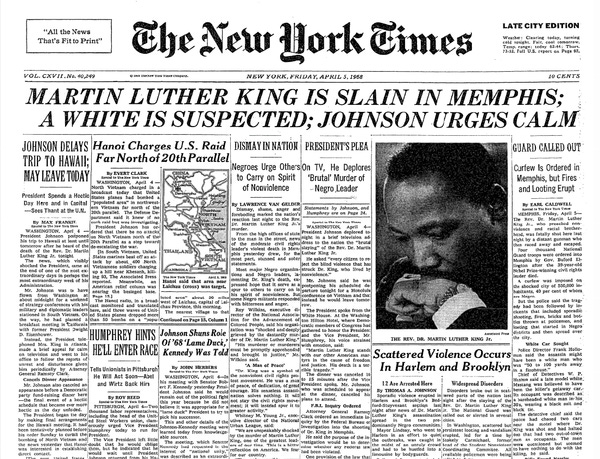
If King’s legacy is to be respected, then Americans must come to terms with the fact that the Martin Luther King they know is and always has been a fragment of the real man. And that his legacy is not some historical piece of antiquity to pull out of the cupboard every year. King’s legacy serves as a strong critique of the very system that now uses his name as a political cudgel.
An Injustice!
A new intersectional publication, geared towards voices, values, and identities!medium.com